9.4”(240mm)~ 10.6”(270mm)
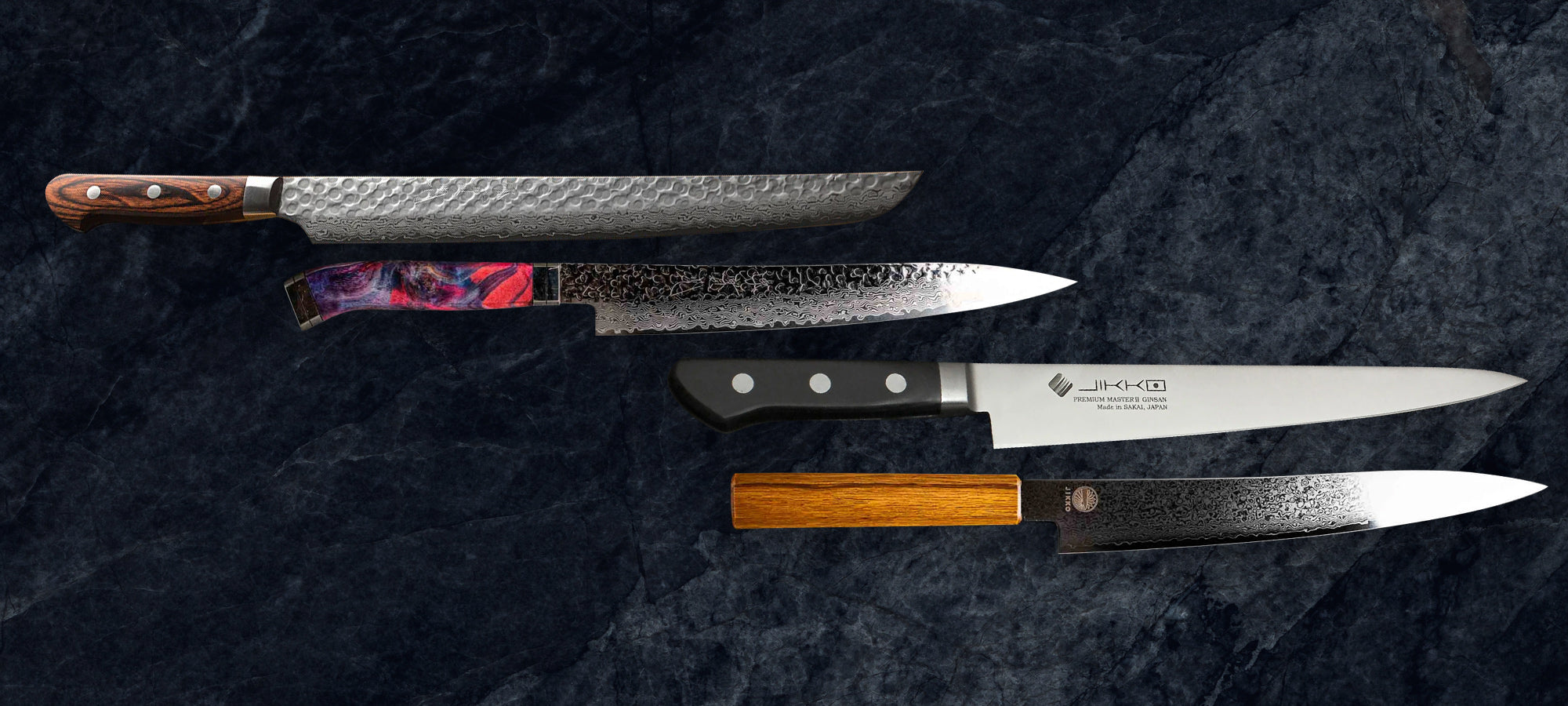

Effortless, Clean Slices with Optimized Geometry
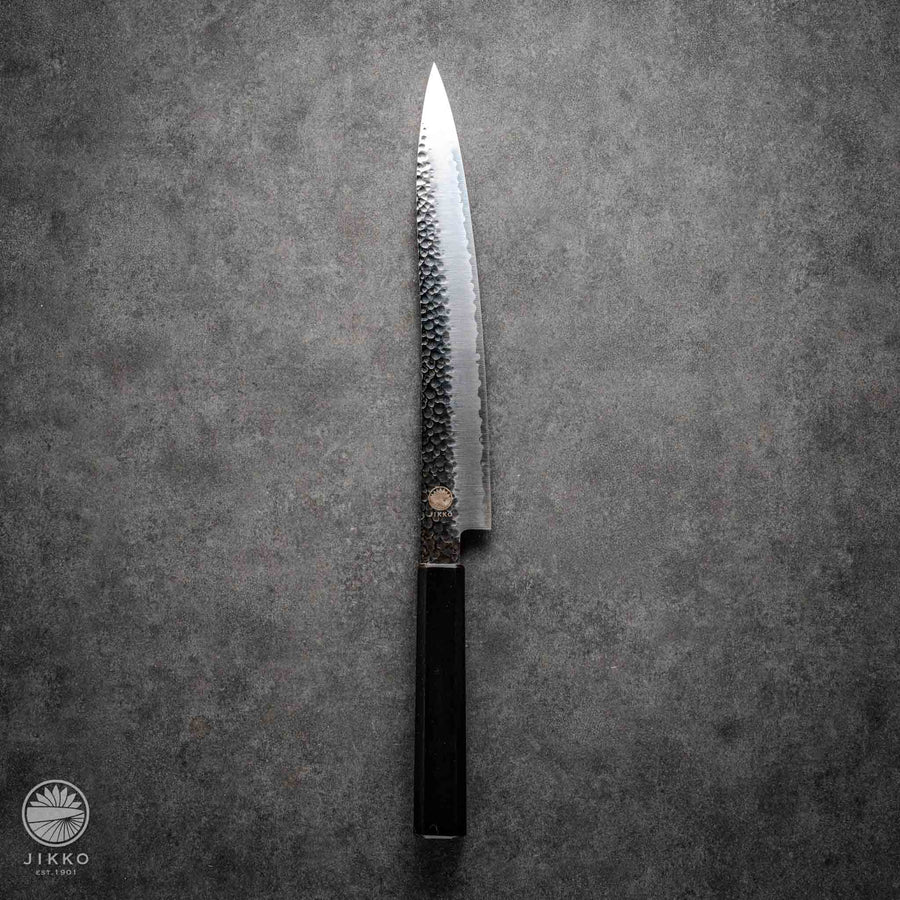
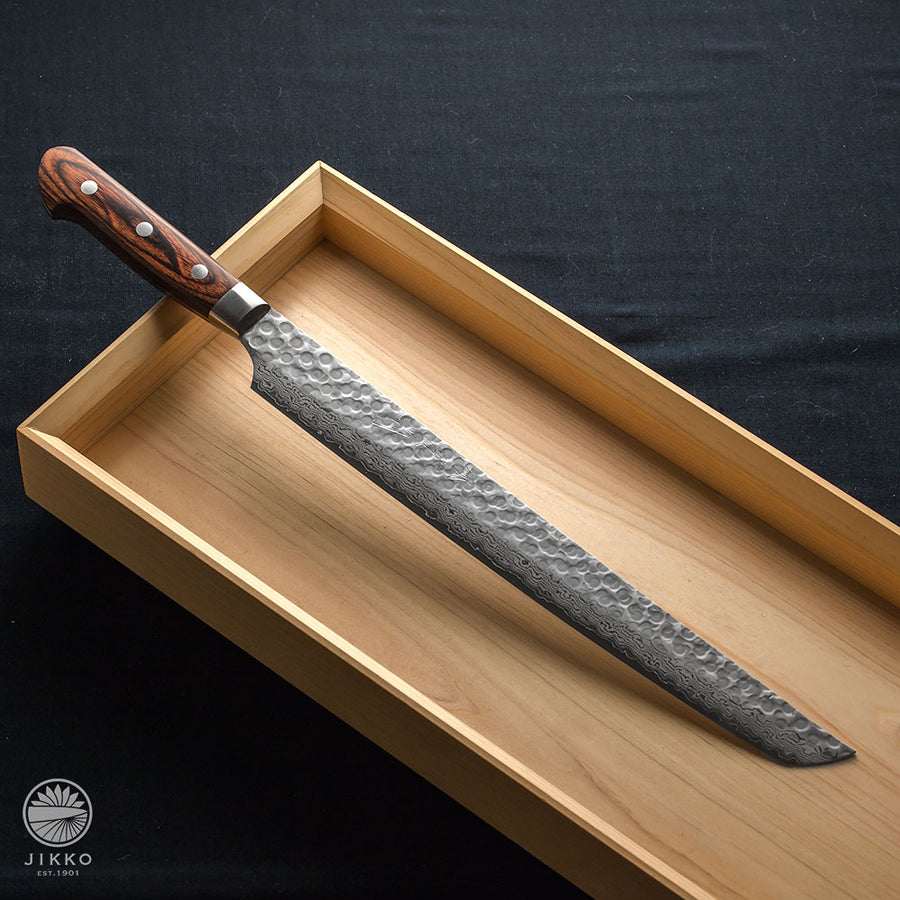
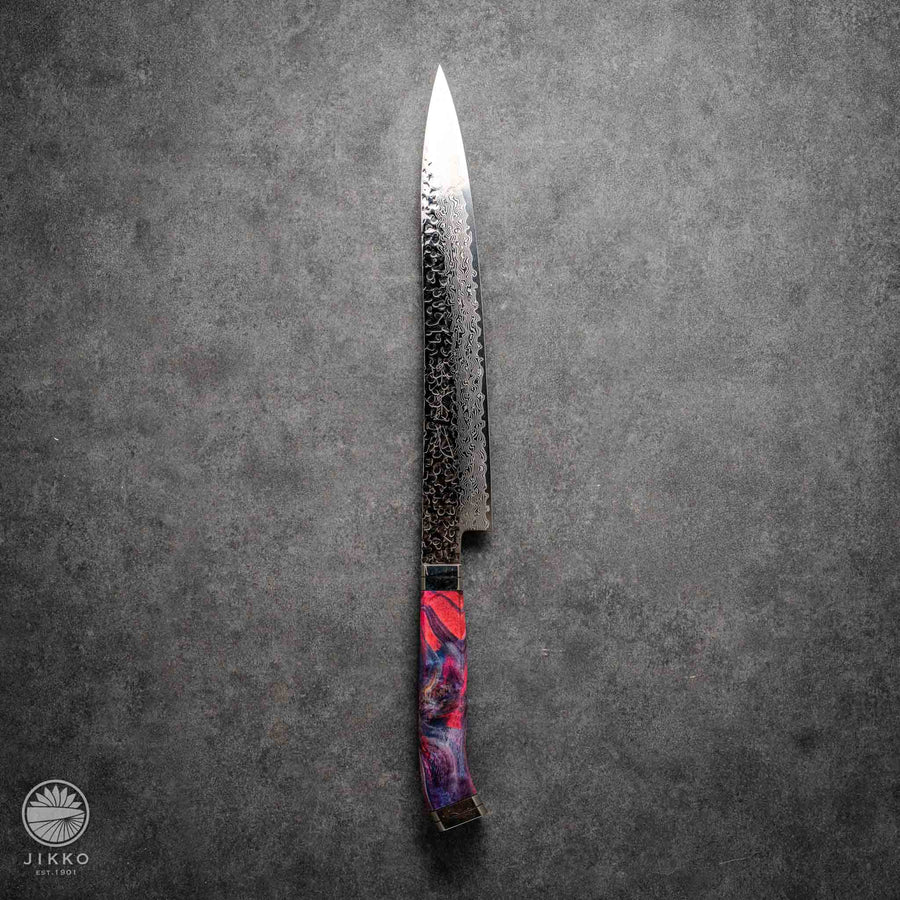
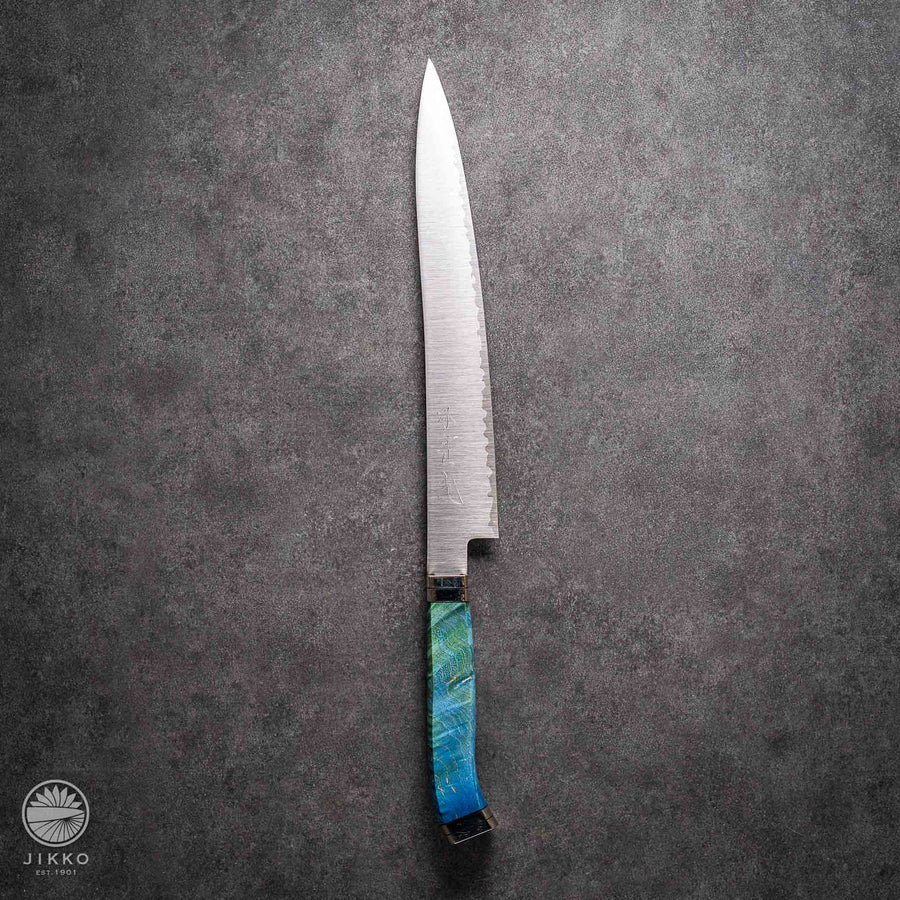
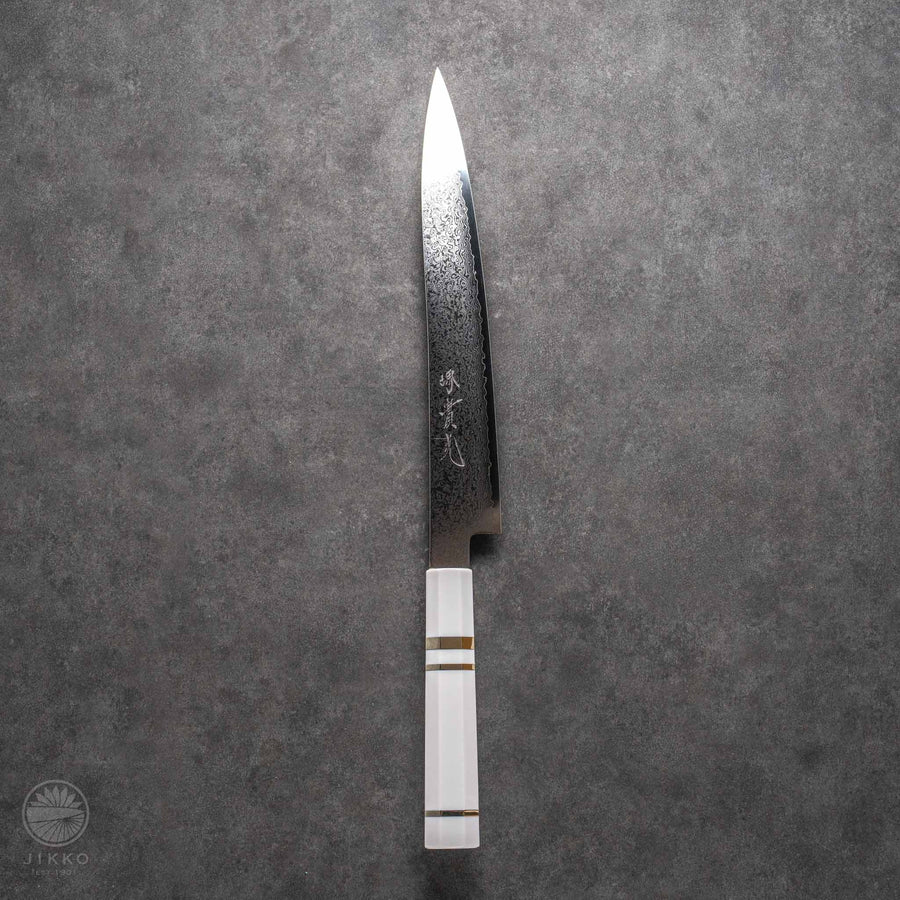
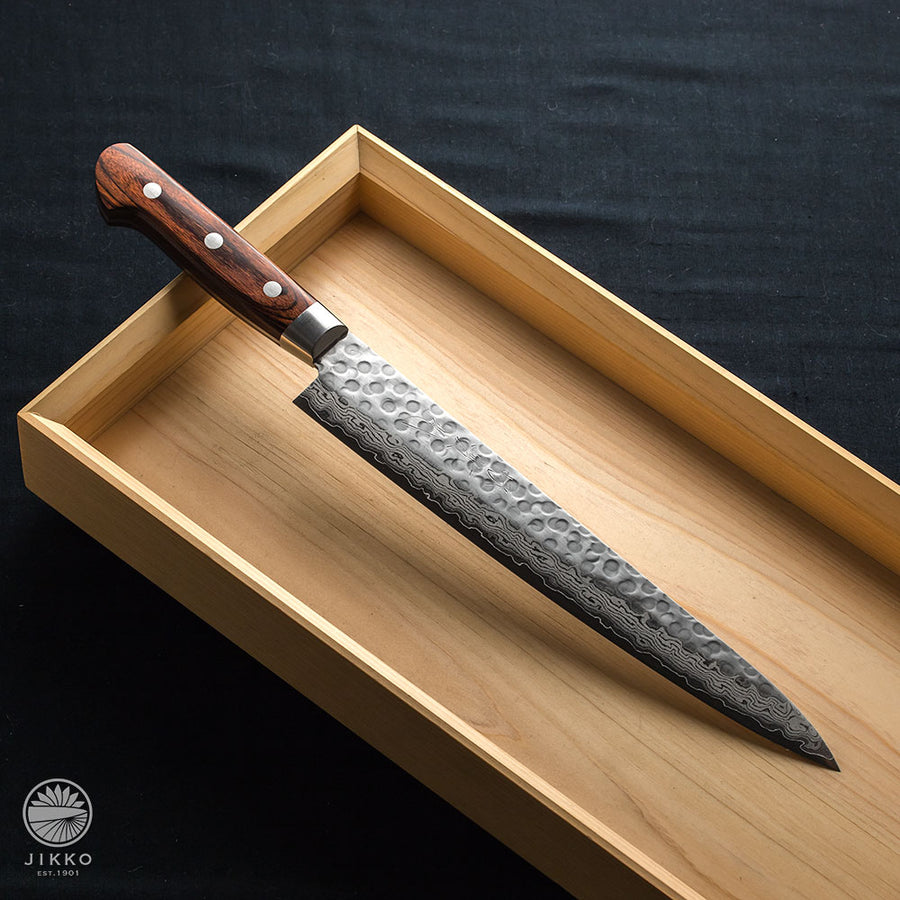
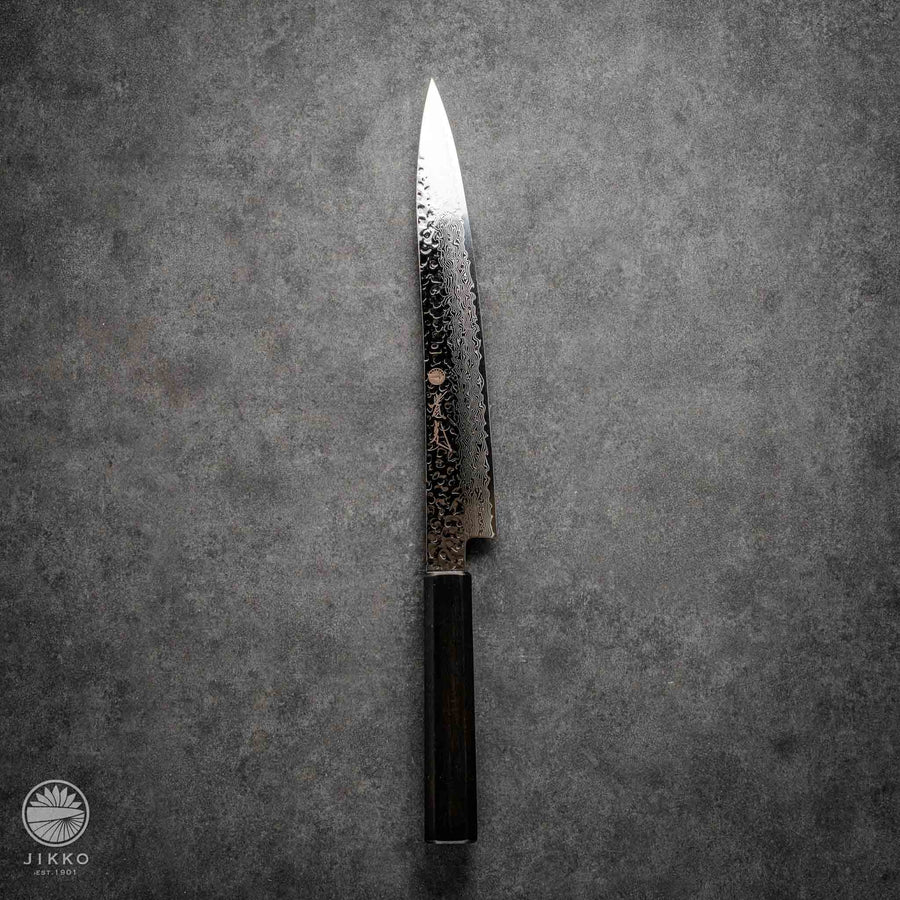
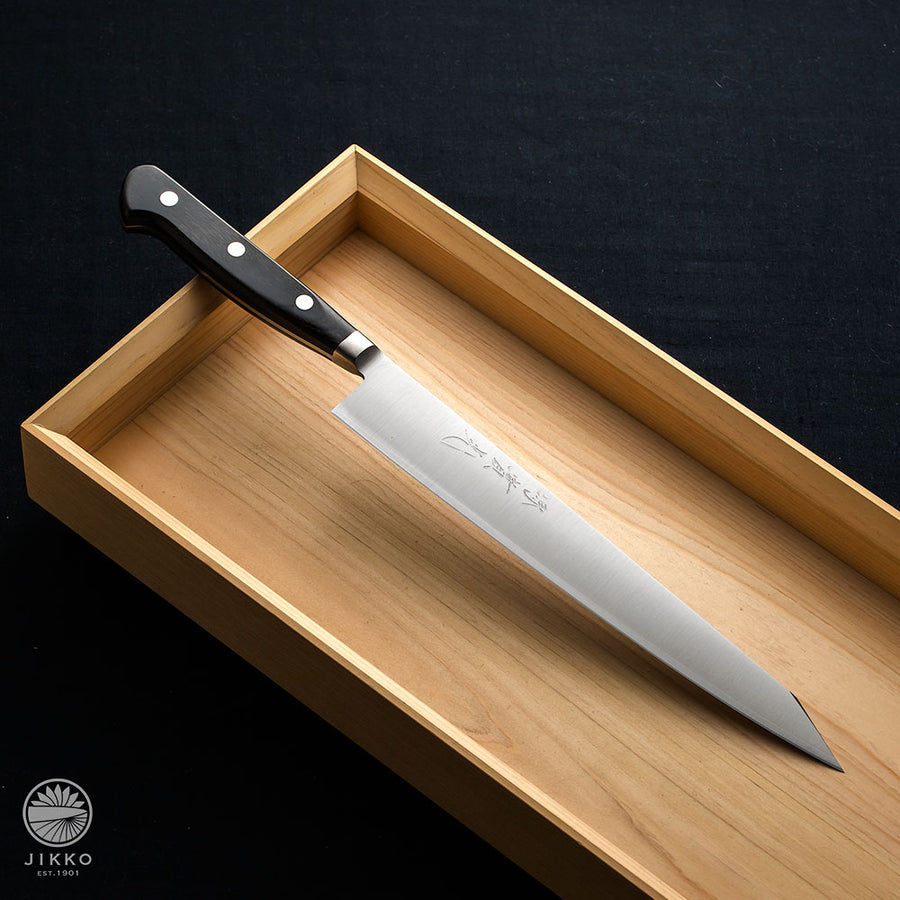
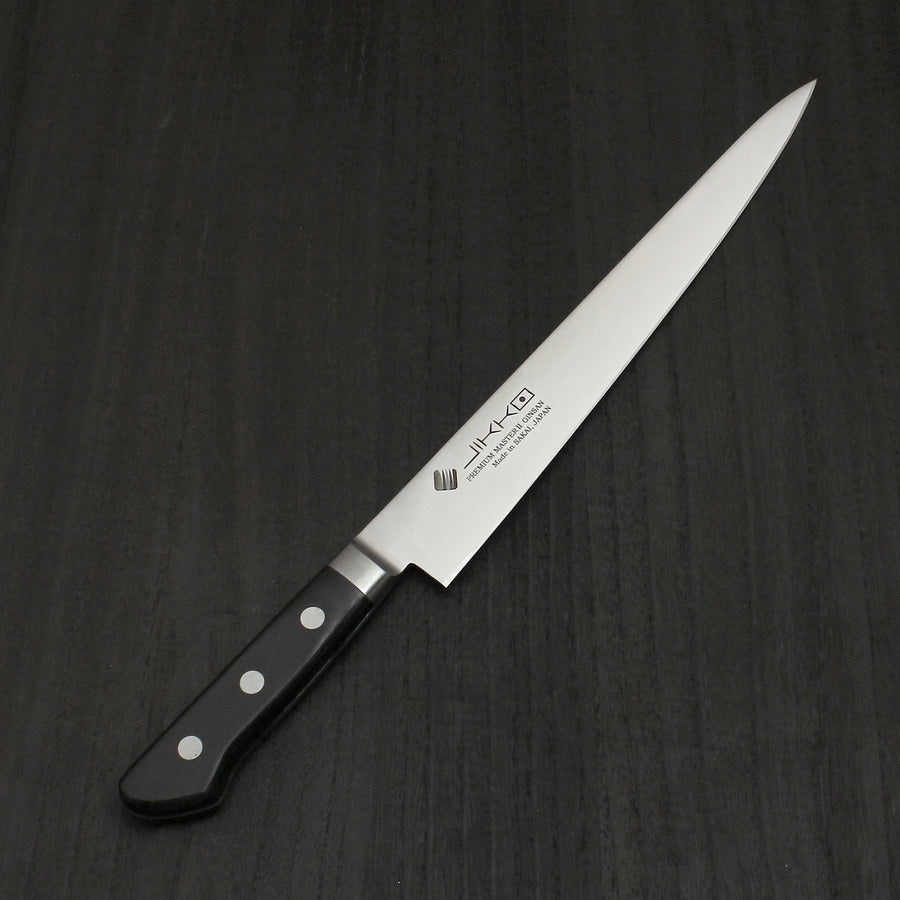
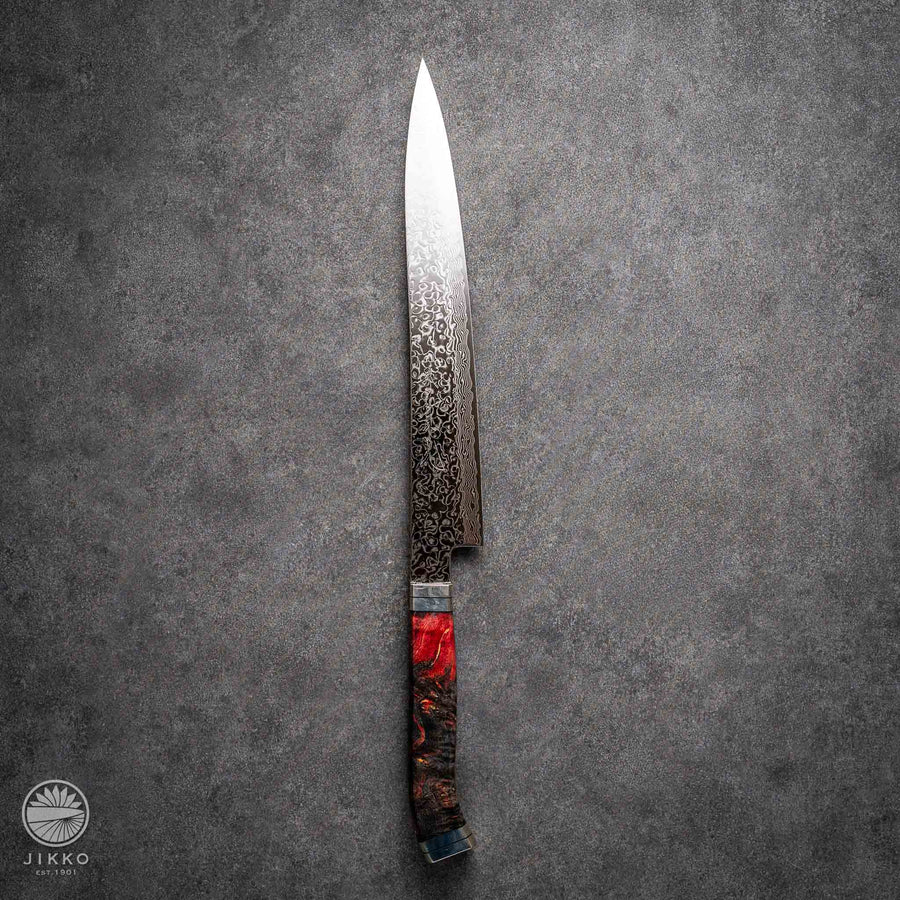
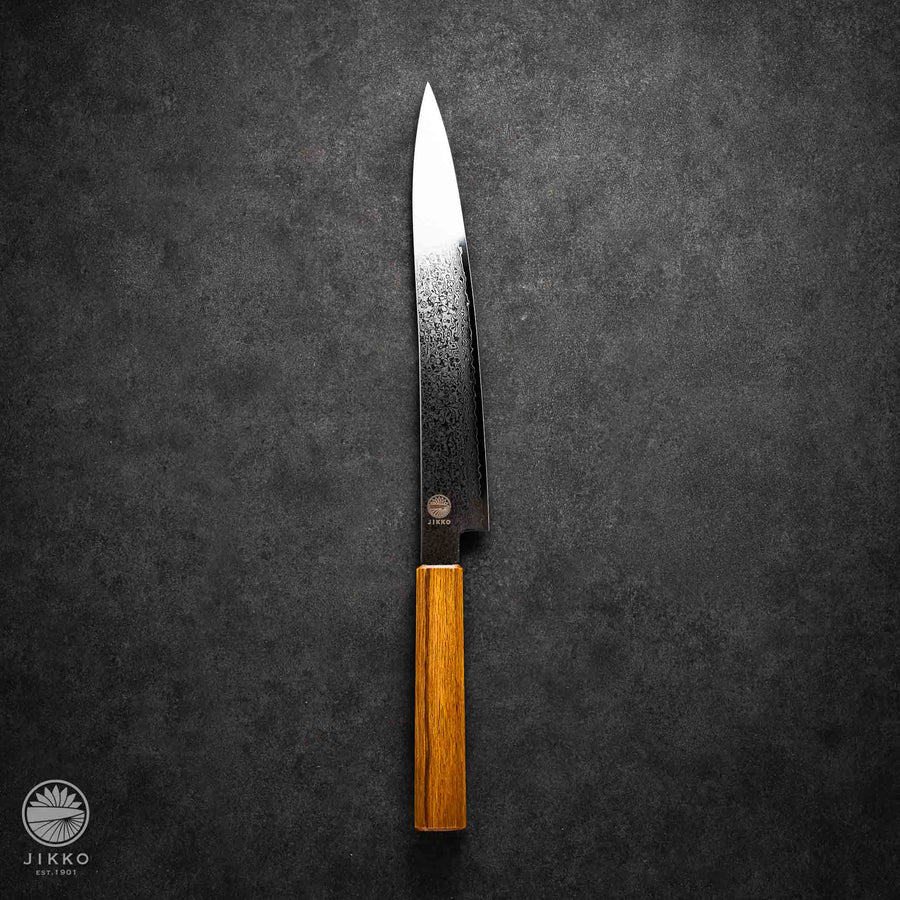
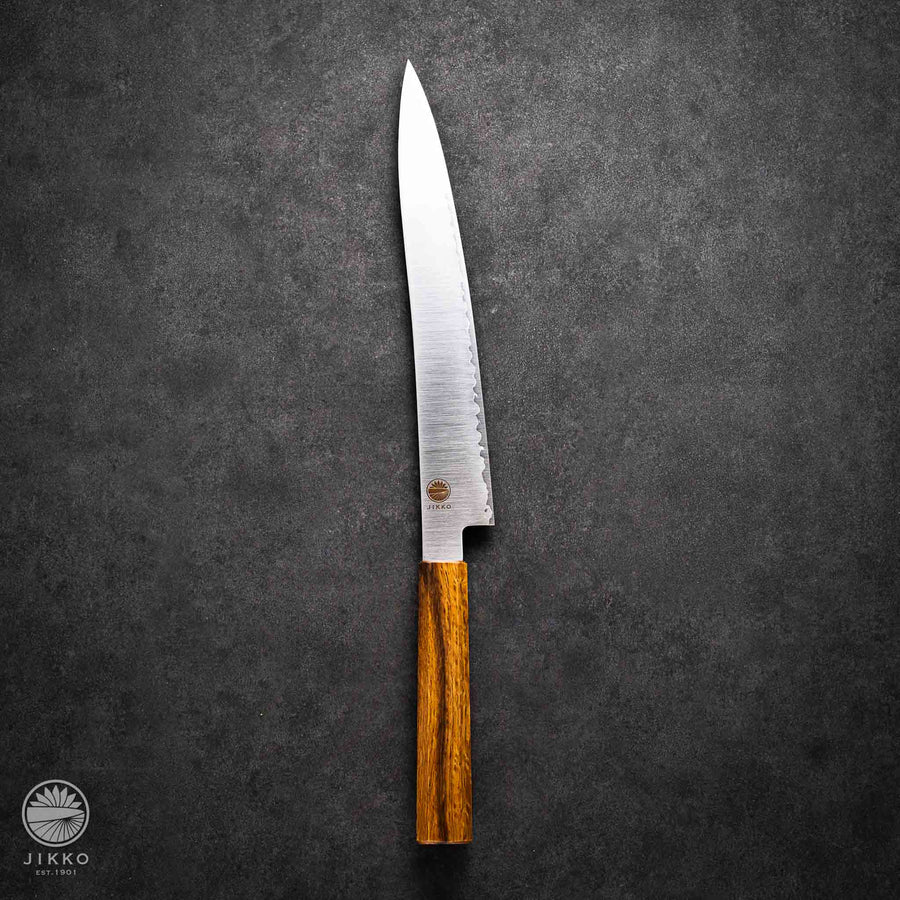
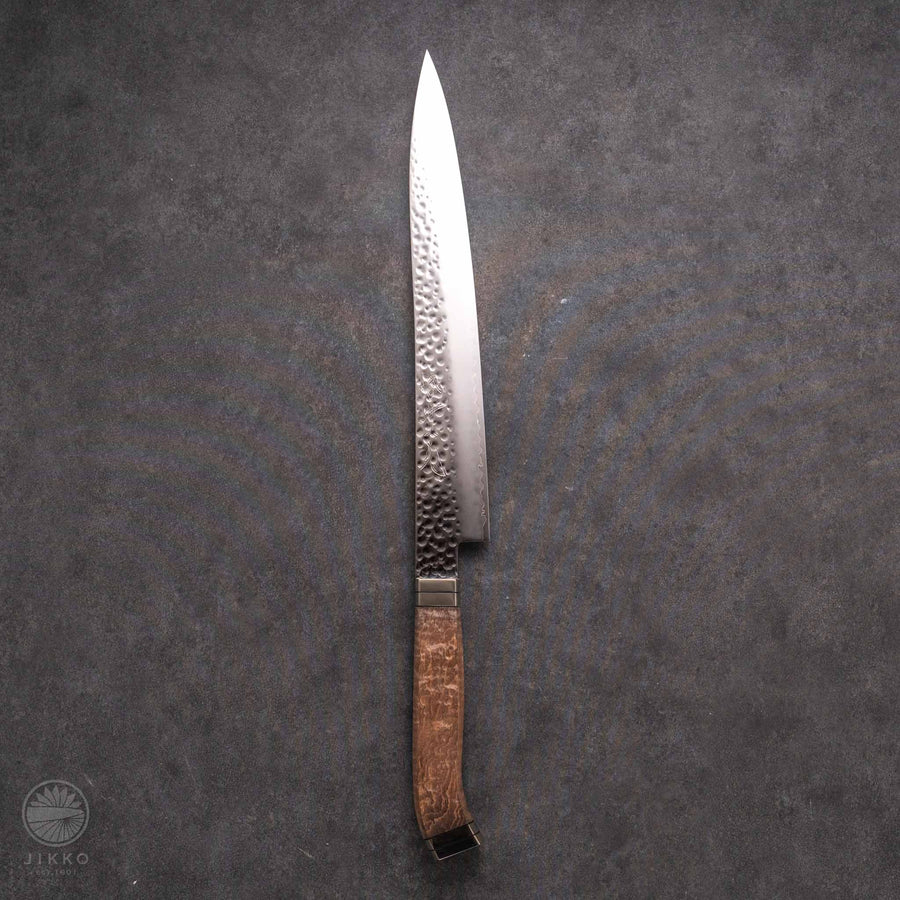
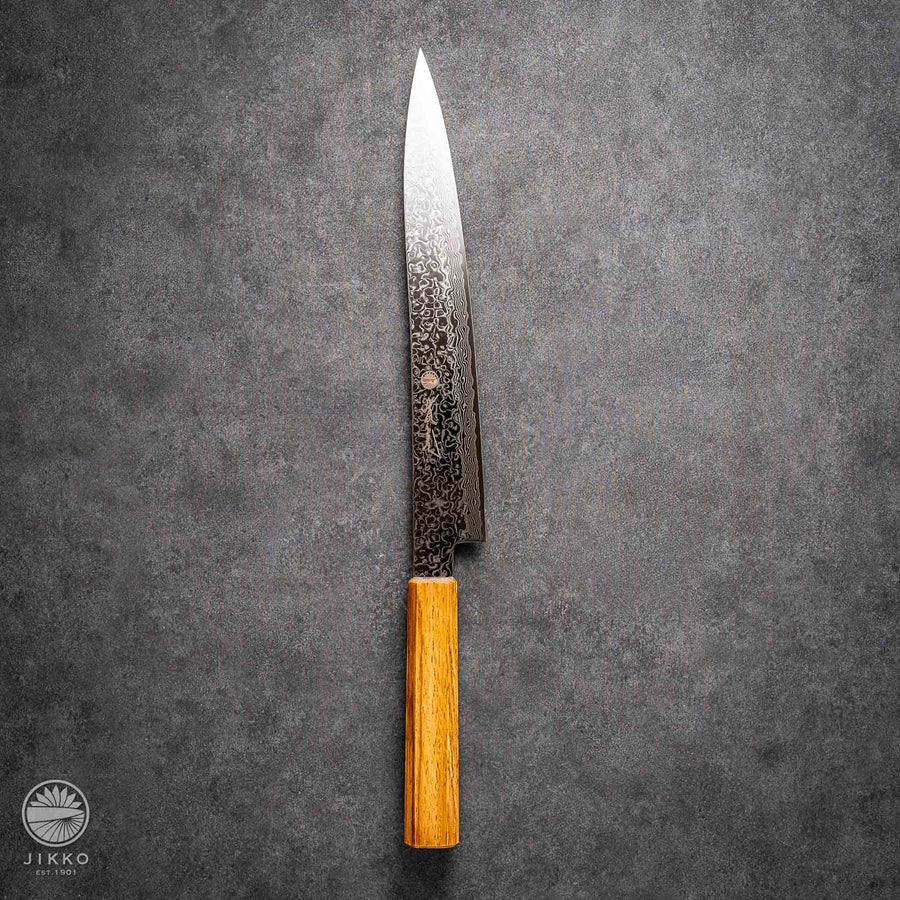
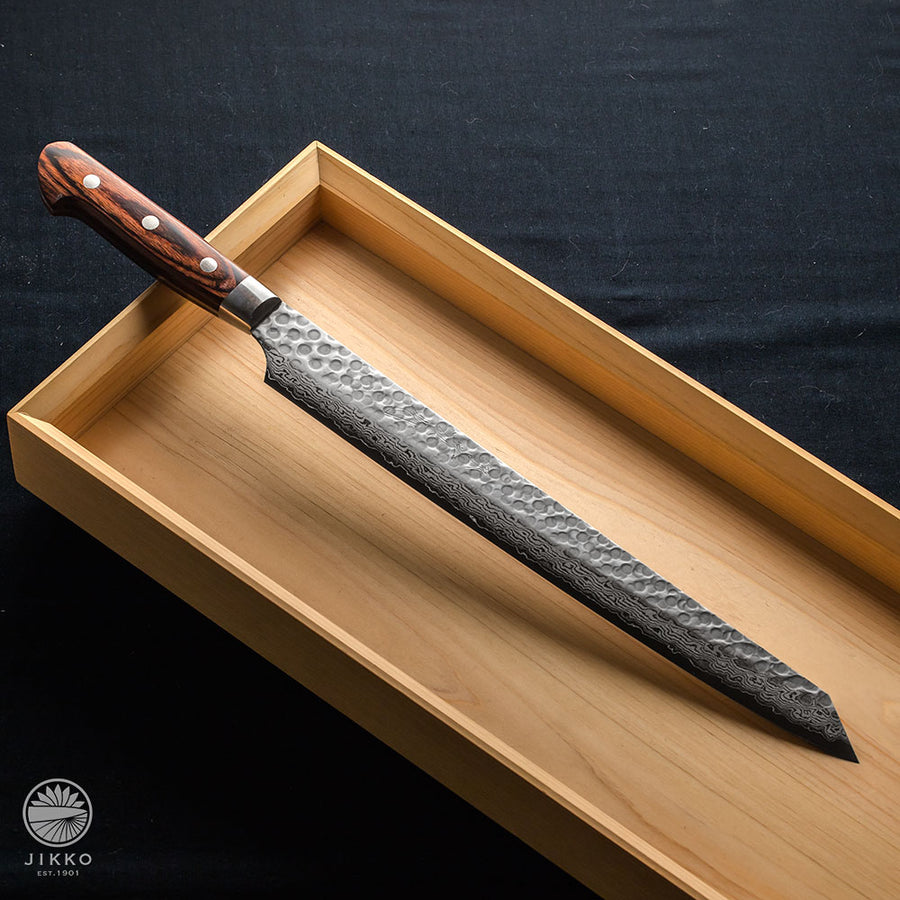
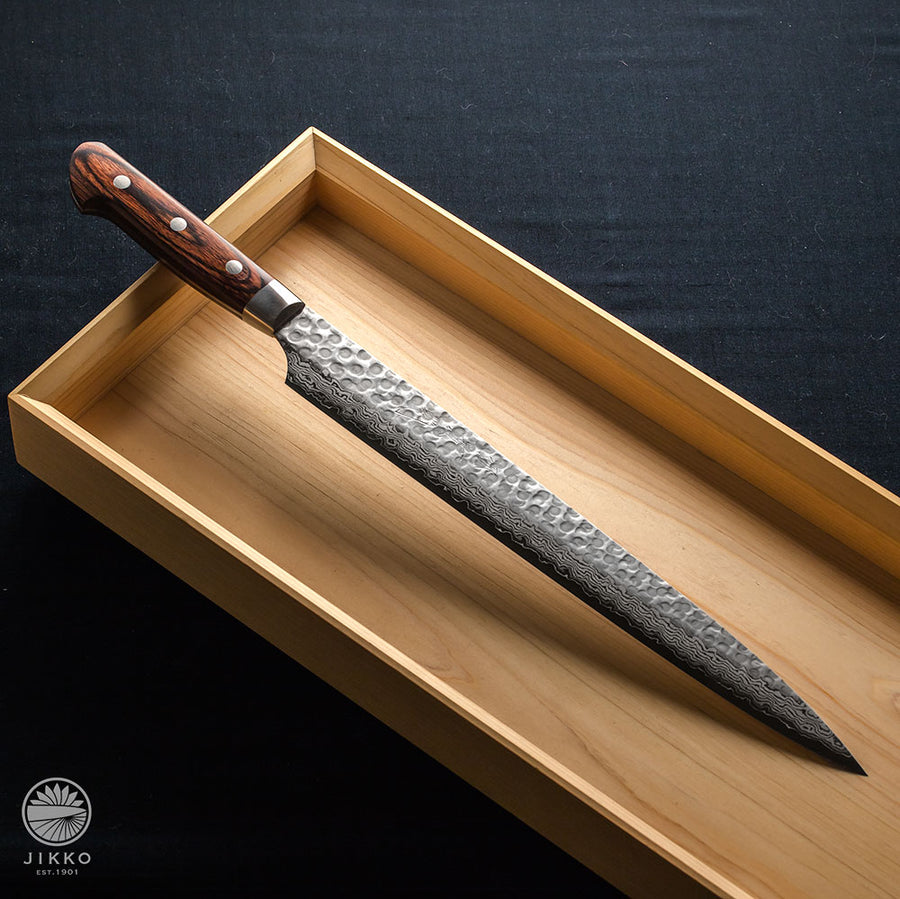
JIKKO’s long, slim Sujihiki profile and precise hand-sharpening allow meat to be sliced in smooth, even strokes—preserving texture and presentation.

Artisan Craftsmanship Trusted by Chefs Worldwide
Each blade is shaped and sharpened in Sakai by expert craftsmen whose skills are recognized by professional chefs across the globe.

Elegant Design with Practical Ease of Use
Refined aesthetics meet well-balanced handling, making the knife both beautiful to look at and comfortable to use—even during long prep sessions.

A 120-Year Heritage of Reliability
As a long-established maker in Sakai, JIKKO delivers consistency, durability, and aftercare that only a true heritage brand can offer.
The most common size is 240–270mm. For home use, 240mm is ideal.For large cuts of meat, 270–300mm is recommended for smooth slicing.

This list categorizes different types of steel used in kitchen knives. The steels at the top of each list offer the best sharpness and edge retention.

Round or octagonal shapeWood is commonly used

Ergonomically designed shape Various materials used
◾️Consider grip comfort
◾️Check balance sensation
◾️Maintenance requirements
| Steps | Stainless Steel Knives(Rust-resistant) | Carbon Steel Knives(Prone to rust) | Icons |
| 1. Cleaning Method | Wash gently with a soft sponge and dish soap (mild detergent) | Wash gently with a soft sponge and dish soap (mild detergent) |  |
| 2. Drying | Wipe thoroughly with a cloth or paper towel | Wash gently with a soft sponge and dish soap (mild detergent) |  |
| Quick Drying | - | Pour hot water over the blade for quick drying |  |
| 4. Oil Coating | - | Apply a very thin layer of vegetable oil (avoid excess) |  |
| 5. Storage | Store in a dry knife stand or holder | After oiling, place in a knife stand or storage box |  |
The Sujihiki is a long, slender knife designed for slicing meat and fish smoothly. Its minimal resistance preserves the texture and appearance of ingredients.
The Sujihiki is specialized for slicing with its thin, long blade, while the Gyuto is a versatile knife for various cutting techniques.
Common sizes range from 240mm to 300mm. A 240mm knife is ideal for home use, while professionals prefer 270mm or longer.
It excels at slicing roast beef, prosciutto, sushi ingredients, and filleting fish.
Lay the blade flat and use a pulling motion for smooth, clean cuts. Avoid pressing down while cutting.
It is suitable for making fillets but not for cutting through bones. A Deba knife is better for that purpose.
Use the entire blade and slice in one smooth motion. Avoid sawing movements to maintain a clean cut.
Fully frozen meat can damage the blade. It’s best to cut when slightly thawed.
Use a whetstone at a 15-20 degree angle and sharpen evenly along the entire blade length.
Weekly light maintenance and a full sharpening session every 1-2 months are recommended.
Wash immediately after use, dry thoroughly, and apply a thin coat of oil if storing for a long period.
Avoid cutting bones or very hard ingredients, and use a soft cutting board to protect the blade.
Stainless steel is easier to maintain and resistant to rust, making it ideal for beginners. Carbon steel provides a sharper edge but requires more care.
Entry-level Sujihiki knives cost between $50-$150, while professional models range from $200 and up, depending on material and craftsmanship.
Professional Sujihiki knives have longer, sharper blades made from high-grade materials for durability, while home-use knives focus on ease of handling.