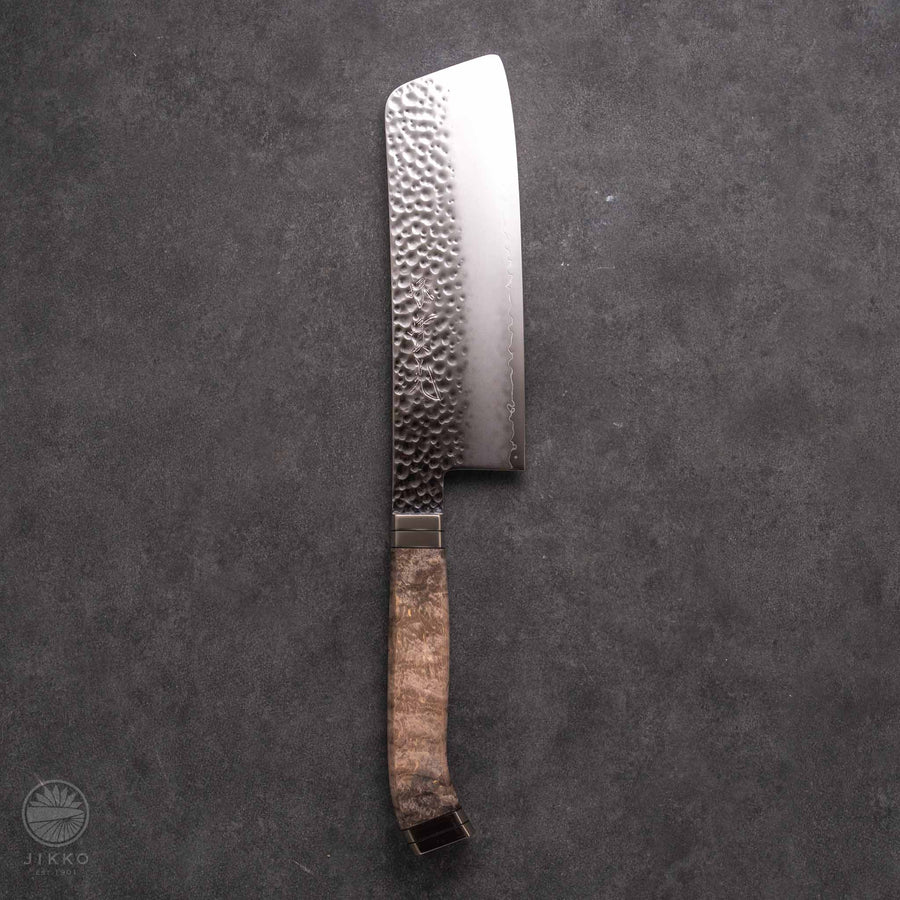
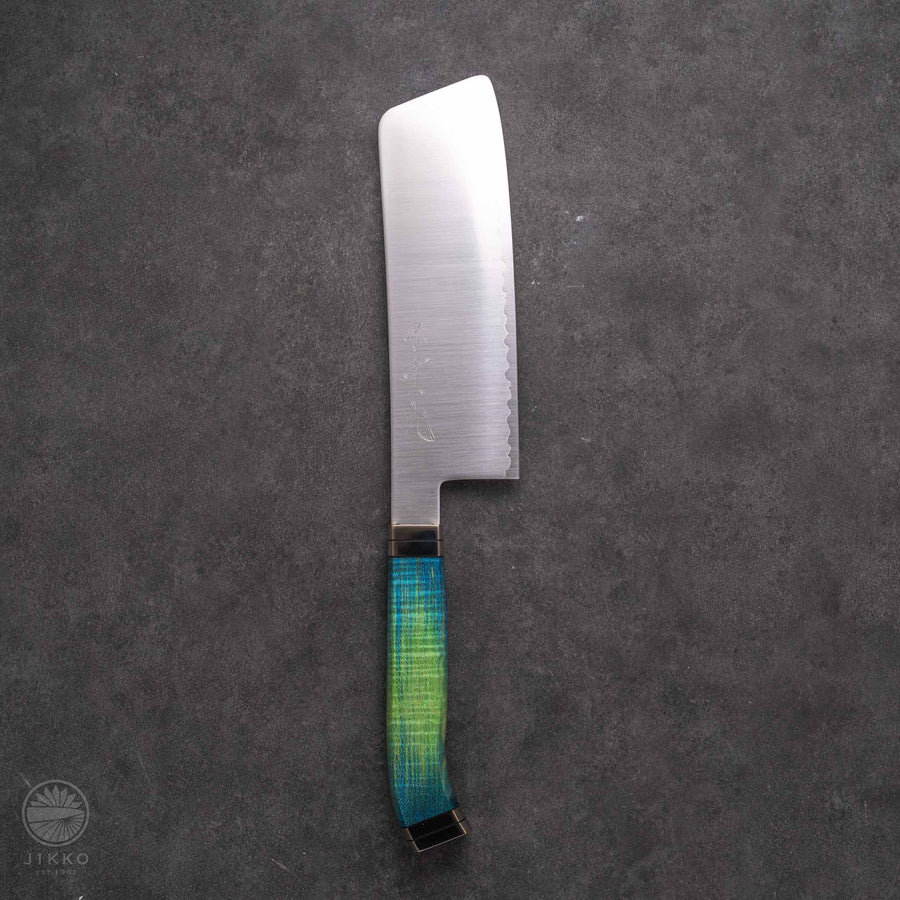
6.5”(165mm)~7.1”(180mm)
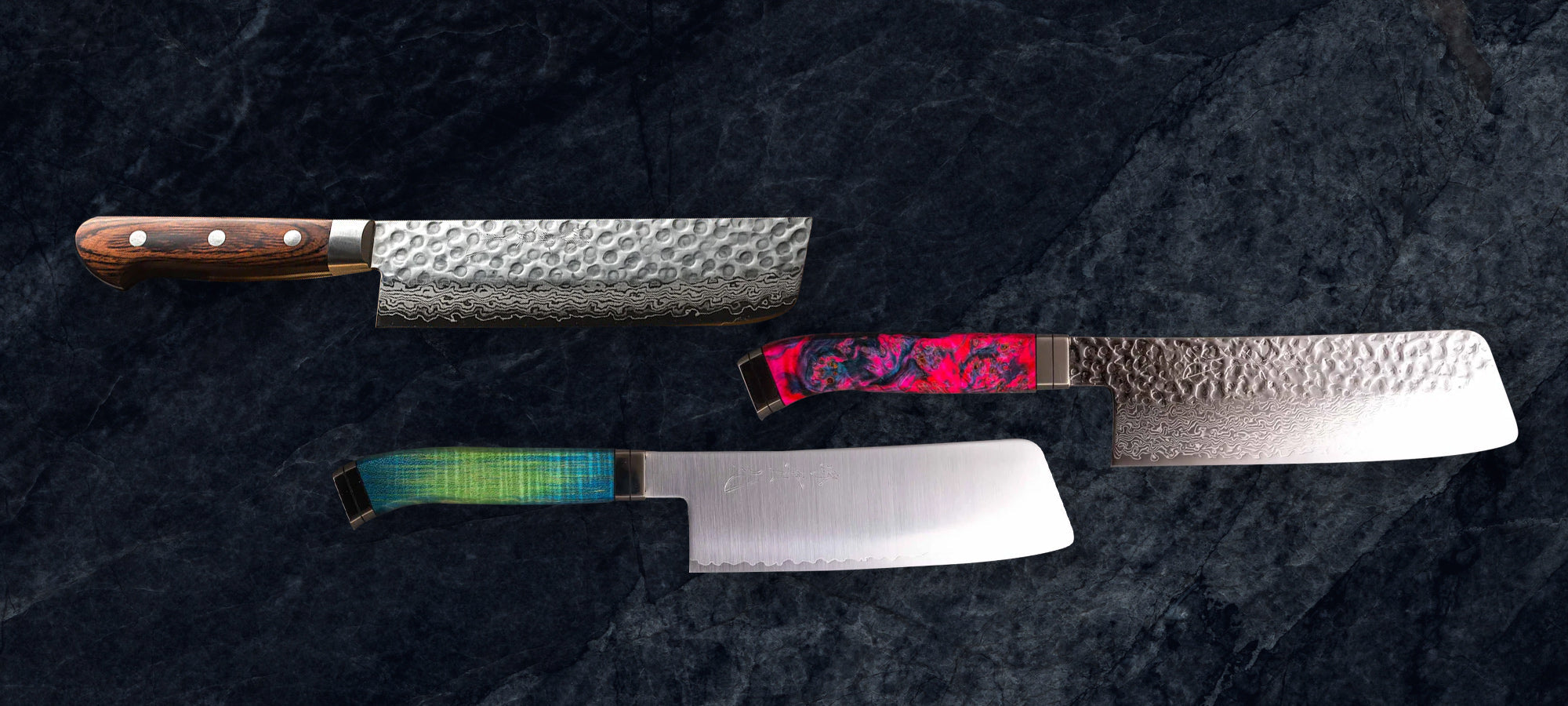

Thin, Straight Geometry for Clean Vegetable Prep
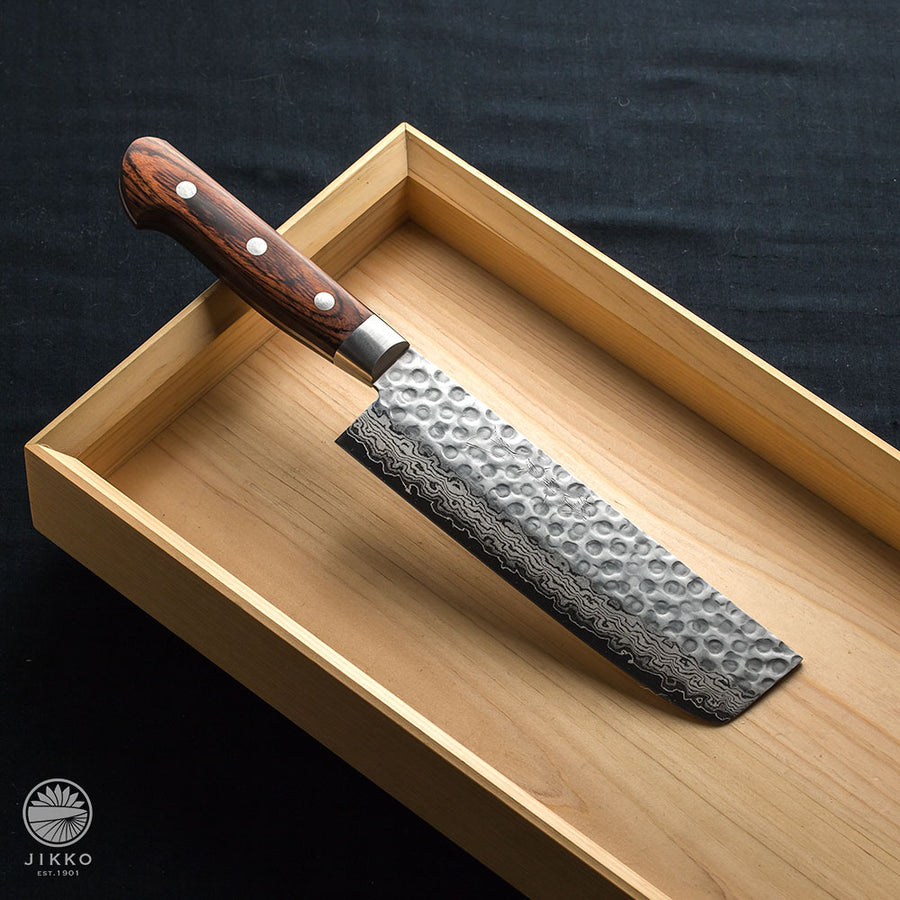
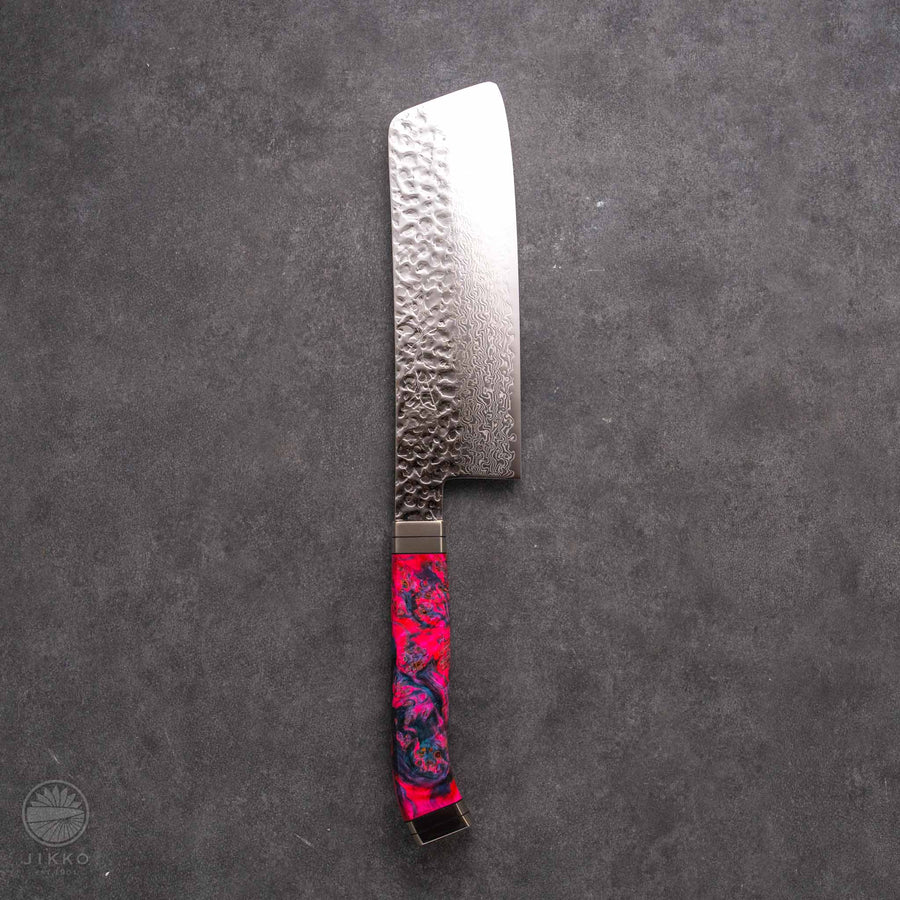
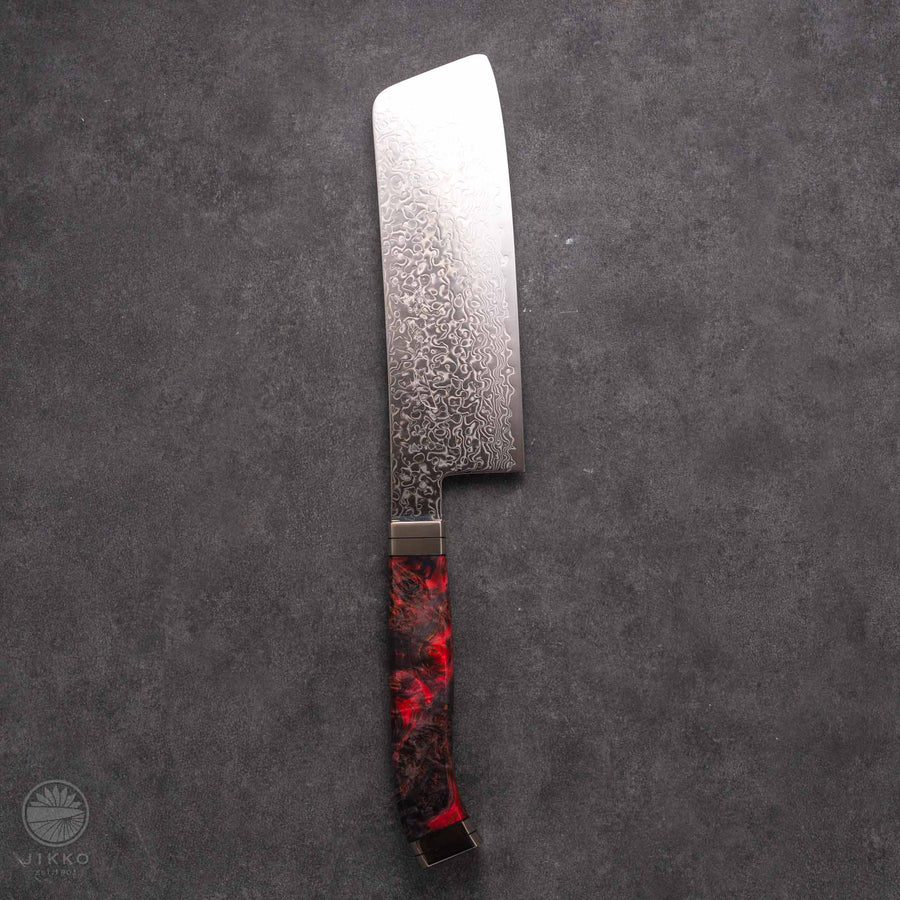
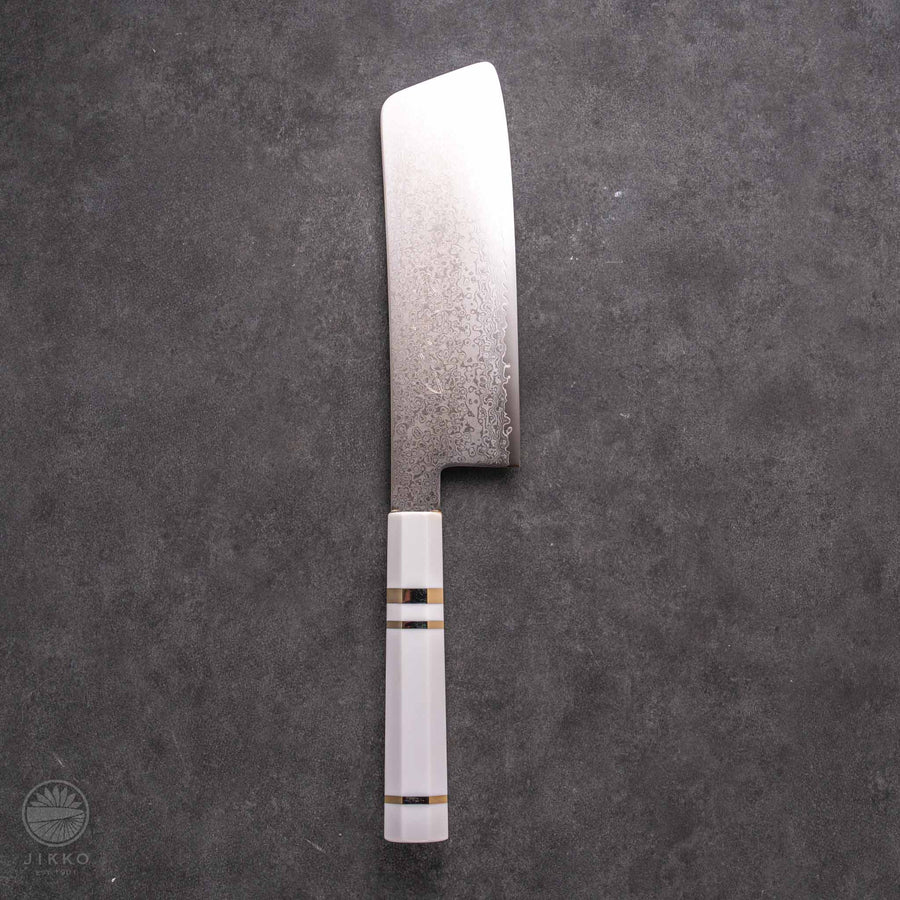
JIKKO’s Nakiri features a thin, flat edge that drops cleanly through vegetables, offering smooth cuts, low resistance, and beautifully even surfaces.

Exceptional Quality Through Precise Finishing
Every knife is carefully finished with attention to detail—ensuring sharpness, consistency, and a trusted cutting experience that reflects JIKKO’s commitment to quality.

Beautiful Design Paired with Everyday Ease of Use
Refined aesthetics, balanced weight, and comfortable handling make the Nakiri both elegant to look at and effortless to use during extended vegetable prep.

A 120-Year Heritage of Trusted Knife Making
With over a century of history in Sakai, JIKKO offers long-term reliability, consistent quality, and the proven craftsmanship of a heritage brand.
The standard blade length is 165–180mm, making it the most practical size for home use.
Traditionally used in Japanese households, the nakiri is ideal for vegetable-focused cooking and is easy to handle for everyday meals.
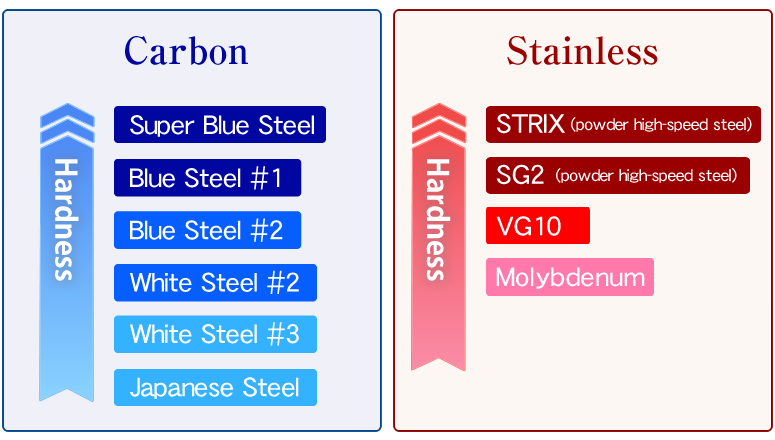
This list categorizes different types of steel used in kitchen knives. The steels at the top of each list offer the best sharpness and edge retention.

Round or octagonal shapeWood is commonly used

Ergonomically designed shapeVarious materials used
◾️Consider grip comfort
◾️Check balance sensation
◾️Maintenance requirements
| Steps | Stainless Steel Knives(Rust-resistant) | Carbon Steel Knives(Prone to rust) | Icons |
| 1. Cleaning Method | Gently wash with a soft sponge and neutral detergent | Gently wash with a soft sponge and neutral detergent |  |
| 2. Remove Moisture | Wipe thoroughly with a cloth or paper towel | Wipe thoroughly with a cloth or paper towel |  |
| 3. Drying | - | Pour hot water over the blade for quick drying |  |
| 4. Light Oil Coating | - | Apply a very thin layer of vegetable oil (avoid overapplication) |
 |
| 5. Storage | Store in a dry knife stand or holder | After oiling, place in a knife stand or storage box |  |
The Nakiri knife is a traditional Japanese vegetable knife designed for precise chopping, slicing, and dicing of vegetables. It has a straight, rectangular blade ideal for clean cuts.
Nakiri knives are perfect for slicing, dicing, and mincing vegetables like cabbage, onions, and carrots. They excel at making uniform cuts.
The Nakiri knife is specifically designed for vegetables, featuring a straight edge for efficient chopping, while the Santoku is a general-purpose knife with a slight curve for versatility.
Yes, Nakiri knives are double-edged, making them suitable for both right- and left-handed users.
The most common size is 165mm to 180mm, which offers a balance of control and cutting surface for home use.
Carbon steel provides exceptional sharpness but requires maintenance, while stainless steel is rust-resistant and easier to care for.
Nakiri knives come with traditional wooden handles for a natural grip or synthetic handles for increased durability and resistance to moisture.
A stainless steel Nakiri with a 165mm blade is ideal for beginners due to its easy maintenance and versatility.
Use a straight chopping motion rather than a rocking motion to make precise, uniform cuts. The flat blade ensures full contact with the cutting board.
Wash and dry immediately after use. If the knife is carbon steel, applying a thin coat of oil helps prevent rust.
Use a whetstone, maintaining a consistent angle, and sharpen evenly along the entire edge to retain its straight cutting ability.
Light rust can be removed with a knife cleaner or a gentle abrasive like baking soda or a rust eraser.
While a Santoku or chef’s knife can handle vegetables, the Nakiri knife is specifically designed for efficient vegetable cutting.
A Gyuto knife is an excellent complement, as it can handle meats and other general-purpose tasks alongside a Nakiri for vegetables.
Professional Yanagi knives use premium materials and are precisely balanced, while home-use knives prioritize affordability and ease of handling.